selected work
building technology from 0 → 1
I build technology products and businesses where software meets the physical world.
My work spans autonomous systems, connected platforms, and intelligent infrastructure. I enjoy understanding the underlying technology, shaping the product, and bringing together engineering, customers, and commercial strategy to turn new ideas into working systems.
These projects illustrate different parts of that process, from technical architecture and product definition to business models, deployment, and scale.
0 → Architecture → Product → Business Model → Deployment → Scale
Autonomous Systems
Bringing autonomous mobility from technical development to real-world deployment
Mercedes-Benz · Silicon Valley
The Challenge
Mercedes-Benz and Bosch were developing Level 4 autonomous-driving technology for a pilot in San Jose. But an autonomous vehicle alone does not create a mobility service.
The pilot needed the complete product and operational layer around the vehicles: rider applications, booking and payments, dispatch systems, routing logic, fleet operations and the infrastructure required to run the service reliably.
There was an additional systems challenge. The service combined fully autonomous vehicles operating within defined geofenced domains with conventional human-driven vehicles that could operate beyond them. The platform therefore had to decide, in real time, which type of vehicle could serve each trip.
All of this had to be built while the underlying autonomous technology was still evolving.

What I Did
As Product Owner, I owned the product definition for the platform supporting a 22-vehicle fleet: five fully autonomous S-Class vehicles and 17 conventional vehicles.
I defined requirements across the rider experience — booking, payment and trip tracking — as well as the driver and operations systems for dispatch, navigation and vehicle status.
The most interesting technical challenge was the orchestration layer.
We developed routing logic that dynamically assigned ride requests between autonomous and human-driven vehicles based on real-time availability, destination and the operating-domain constraints of the autonomous fleet. That allowed the customer experience to remain consistent even though the underlying vehicles had fundamentally different capabilities.
I worked with engineering teams across San Jose, Berlin and Stuttgart to translate operational requirements into the product and coordinate development across the different system components.
Reliability was equally important. We operated local server infrastructure and established rapid incident-response processes to maintain platform availability during live operations.
The product also extended beyond software. I helped define the end-to-end service experience inside the vehicles and built the operational organization around the platform, including hiring and managing more than 20 drivers.
I also worked with the City of San Jose on pilot progress and the regulatory requirements surrounding deployment.
The Impact
We successfully moved the platform from development into real-world operations with a 22-vehicle fleet and real users.
The platform maintained more than 99% uptime while managing the routing complexity of a mixed autonomous and human-driven fleet.
The pilot was initially operated with Daimler employees and was being prepared for broader public deployment before the pandemic brought the program to an end. The operating processes and lessons from the pilot subsequently informed autonomous-mobility work elsewhere in the organization.
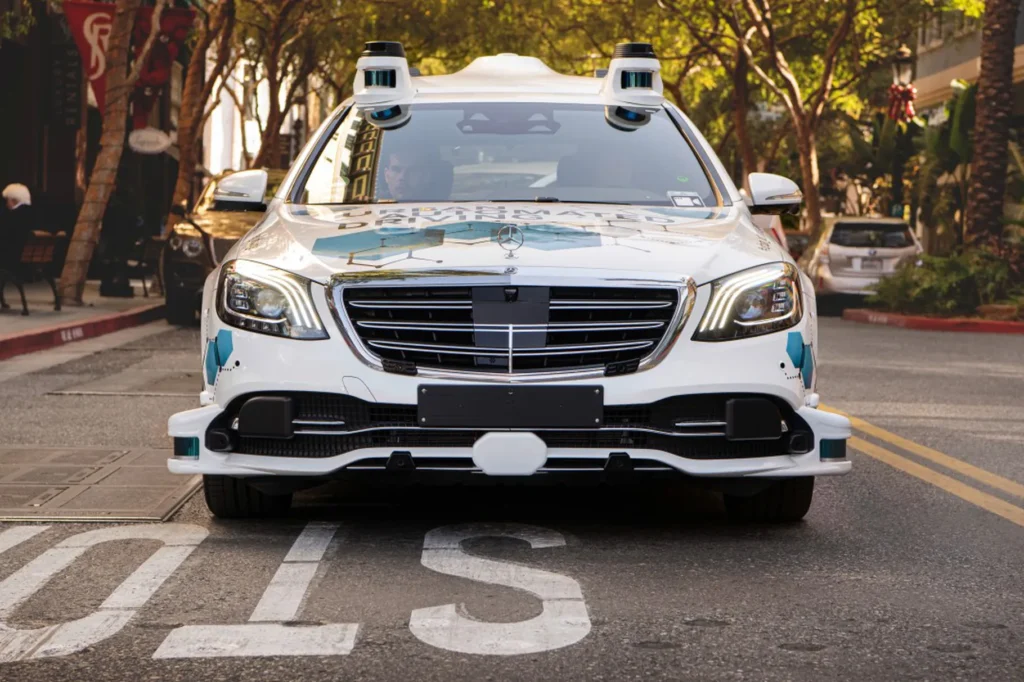
Autonomy is a systems problem.
The autonomous-driving technology attracted most of the attention, but delivering a working service required much more than the vehicle.
Routing, dispatch, reliability, rider experience, fleet operations, regulation and people all had to work together.
That experience shaped how I think about autonomous systems and physical AI today: intelligence in the physical world creates value only when the surrounding product and operating system can turn the underlying technology into something people can actually use.
Intelligent Platforms
Launching and commercializing a connected platform across six European markets
General Motors · Europe
The Challenge
General Motors was preparing Cadillac’s return to Europe with a direct-to-consumer electric-vehicle model.
Charging was a critical part of that customer experience, but GM did not have an existing European platform or partner ecosystem to support it.
The market itself was fragmented. Different charging networks, hardware providers, payment systems and regulatory requirements existed across countries, while established premium competitors already had mature offerings.
The challenge was not simply to build an app. It was to create the platform behind it: one customer experience connecting multiple physical and digital systems across markets.

What I Did
I led the development of the platform from 0-to-1, owning the product and technical roadmap and working across internal engineering teams, commercial stakeholders and external technology partners.
We selected a white-label SaaS partner as the backbone and designed an architecture connecting public charging networks, home-charging hardware, payment providers and vehicle-to-cloud services through APIs and integrations.
I led partner selection across Europe and managed technical integrations with multiple charging networks and payment processors.
A particularly important part of the architecture was the billing layer. Customers should not have to understand the fragmentation behind the product, so we designed the experience around a unified customer account and billing relationship rather than forcing users to manage separate accounts with individual charging networks.
Behind that simplicity sat considerable complexity: different partner interfaces, payment flows, reconciliation processes and country-specific fiscal requirements all had to be handled by the platform.
I also worked on vehicle-to-cloud integration to surface real-time charging information inside the digital experience.
Alongside the technical architecture, I designed a tiered subscription model around different customer usage profiles, connecting the product architecture to a recurring-revenue business model.
Throughout the development, I reported directly to the GM Europe CEO as part of the extended leadership team.
The Impact
The platform was delivered within 18 months and launched as part of Cadillac’s European proposition across its initial markets.
It achieved more than 60% customer adoption, a 4.6 App Store rating and strong ongoing engagement.
The most important outcome, however, was the experience created for the customer.
Instead of navigating multiple charging-network accounts, payment relationships and service providers, customers could access the ecosystem through one integrated product and receive one consolidated bill.
The platform turned a fragmented infrastructure landscape into a coherent customer experience.
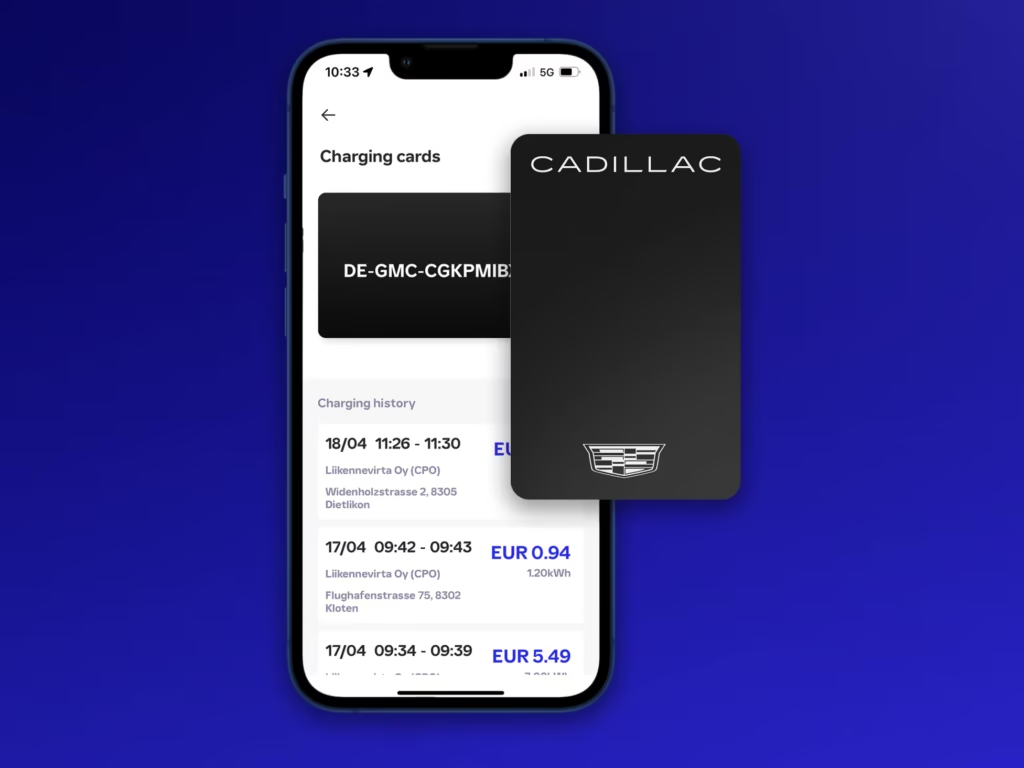
The best platforms hide complexity rather than expose it.
Technically connecting APIs and systems was only part of the problem.
The harder work was aligning charging networks seeking their own commercial interests, payment providers with different economics, country-specific requirements and internal stakeholders adapting to a new business model.
Building a platform means understanding the entire value chain, identifying where complexity and friction accumulate, and deciding which of that complexity the platform should absorb so the customer does not have to.
Technology Venture Creation
Building the business and technology foundations for a $650M infrastructure venture
Daimler Truck · BlackRock · NextEra Energy · USA
The Challenge
Electrifying commercial transport required more than electric trucks.
Fleet operators also needed large-scale, high-power charging infrastructure along freight corridors and at key logistics locations. Yet building and operating a nationwide infrastructure network was not something Daimler Truck could or should solve alone.
The solution required three very different capabilities: Daimler Truck’s understanding of commercial fleets, external capital and investment expertise, and deep energy and infrastructure capabilities.
The challenge was to turn those ingredients into a viable new venture — with a technology architecture, customer proposition and economic model that worked together.

What I Did
I led the commercial and technical design of what became Greenlane.
We started with the customer and the system rather than the individual charger.
I translated fleet requirements into an end-to-end technology architecture spanning user applications, backend systems, APIs, communication protocols and charging hardware specifications.
I also worked with site-selection teams to evaluate potential charging locations against real fleet routes and grid capacity. This connected the digital and hardware architecture to the physical constraints of deploying infrastructure in the real world.
In parallel, I built the commercial architecture around the platform.
That included pricing, unit economics, customer lifetime value, return-on-investment scenarios and alternative deployment strategies. The objective was to understand not only whether the network could technically serve commercial fleets, but under which assumptions it could become an economically viable infrastructure business.
Those two workstreams were deeply interconnected. Hardware choices affected capital requirements. Site design affected utilization. Software architecture influenced the customer proposition. Pricing affected adoption and therefore infrastructure economics.
I repeatedly presented the resulting business case to the Operating Committee and Board as the venture moved through the investment process.
The Impact
The work contributed to investment approval and the formation of Greenlane, backed by more than $650 million from Daimler Truck, BlackRock and NextEra Energy.
The joint venture allowed Daimler Truck to address one of the largest barriers to commercial-fleet electrification without carrying the full infrastructure challenge alone.
For fleet customers, the model created a path toward more predictable access to the infrastructure required to electrify operations.
For Daimler Truck, it expanded the ecosystem beyond the vehicle into the physical and digital infrastructure around it.
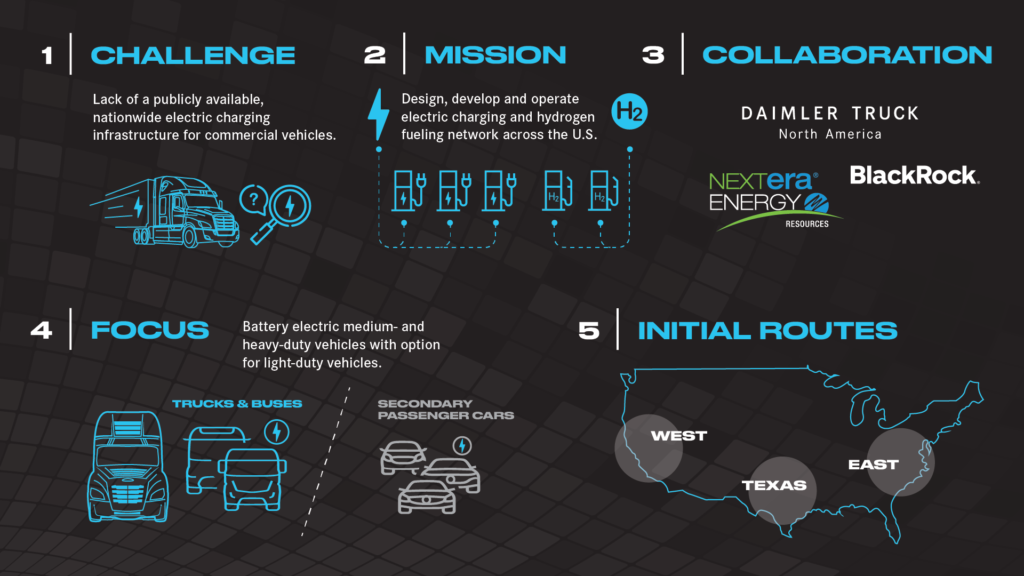
Technology architecture and business architecture are inseparable.
Every technology decision had an economic consequence, and every business-model choice created technical and operational constraints.
The three partners also viewed the venture through different lenses: strategic positioning for Daimler Truck, financial returns for BlackRock, and infrastructure and operational feasibility for NextEra Energy.
Making the venture work required translating continuously between those perspectives and turning them into one coherent system and investment case.
That ability to connect technology, customers, operations and capital became one of the most important lessons of the project.
Hardware/Software Product Development
Building a New Technology Business Inside Daimler Truck
Daimler Truck North America · USA
The Challenge
While large-scale public infrastructure was being developed, Daimler Truck’s fleet customers had a much more immediate problem: they were buying electric trucks and needed a way to charge them.
That created an opportunity to build a new hardware/software business around depot charging.
But the product sat outside Daimler Truck’s traditional model. Charging infrastructure involved unfamiliar hardware suppliers, software integration, electrical infrastructure and a fundamentally different sales motion.
And if the business was going to scale, we needed to make a non-automotive technology product work through an organization and distribution network designed to sell trucks.

What I Did
I built the business from scratch.
On the product side, I researched and qualified potential white-label hardware manufacturers, including visiting factories in Spain to evaluate production quality and technical capabilities directly.
I defined hardware requirements around the future needs of the North American commercial-truck market rather than simply sourcing an existing off-the-shelf product.
The hardware was only one layer.
I worked closely with our development team in Portugal to integrate Daimler Truck’s proprietary software with the charging equipment, creating a hardware/software proposition designed around fleet operations rather than a standalone charger.
On the business side, I developed the pricing and resale model so the proposition worked economically for both the distribution channel and end customers.
Then came the scaling challenge.
I designed the go-to-market model, created sales-enablement materials for the North American dealer network and integrated the new offering into existing truck-sales processes and systems.
I also worked directly with major fleet customers to understand their operational requirements, model total cost of ownership and translate those needs into infrastructure solutions.
The Impact
The work established a new revenue stream beyond vehicle sales and gave Daimler Truck customers an immediate path to deploy charging infrastructure alongside their electric trucks.
More importantly, the proprietary software integration differentiated the proposition from generic charging hardware and created the foundation for ongoing value around fleet charging operations.
The business demonstrated that an established industrial company could extend into an adjacent technology category by combining external hardware, proprietary software, customer access and an existing distribution ecosystem.
Building a new technology business inside an established company is as much an organizational problem as a product problem.
Finding a manufacturer and defining the technical specifications were solvable.
Changing how an established organization operated was harder.
Dealers were accustomed to selling trucks, not infrastructure. Sales processes had to accommodate a new product category. Service teams needed different capabilities. Incentives and internal ownership had to evolve.
0-to-1 inside a large company therefore requires two builds at the same time: the external product and business, and the internal system capable of supporting it.
Intelligent Connected Infrastructure
Rebuilding strategic accounts and creating new commercial growth channels
Siemens · Switzerland
Challenge
When I took responsibility for Siemens Switzerland’s eMobility business, the business was at an inflection point.
The portfolio covered more use cases than the local organization could effectively support, the go-to-market model lacked sufficient focus, and the enterprise depot-charging market was maturing rapidly.
At the same time, previous execution issues had affected customer confidence. One of the largest opportunities in the market came from a customer with a difficult experience from an earlier Siemens deployment and who was actively considering competitors.
The business needed greater focus, stronger operational execution and a more compelling value proposition around the installed technology.

What I Did
I sharpened the portfolio around areas where we could create differentiated value, particularly enterprise depot infrastructure.
We built a dedicated customer-support capability, strengthened local product management and created an indirect channel to extend market coverage without simply adding resources.
But the more important shift was in how we thought about the product itself.
Rather than treating infrastructure as hardware delivered at the end of a project, we increasingly used connectivity and data to manage the performance of the installed system.
We introduced fleet-level monitoring of charger uptime, utilization and availability and used that visibility to build managed-service propositions around system performance.
The customer with the earlier difficult experience became an important test of the approach.
Instead of trying to overcome the history with a purely commercial proposition, we combined proven technology, a redesigned service model, clearer operational accountability and direct commitments around performance.
We won the customer back.
In parallel, I introduced LLM-assisted workflows into commercial processes such as tender and pricing analysis and used IoT data to improve how the connected installed base was monitored and managed.
The Impact
The repositioning strengthened the business around a clearer enterprise proposition and expanded the model from infrastructure projects toward recurring service relationships.
Real-time monitoring enabled us to manage connected assets more proactively and support performance commitments with actual system data.
The recovered customer relationship was particularly important: a customer that had reason to be skeptical chose to work with Siemens again under the new product and service model.
AI-enabled workflows also reduced the effort required for complex commercial analysis, while IoT-based monitoring improved our ability to identify and address issues across the installed base.
Connected products create the opportunity to change the business model around them.
The initial problem looked like a portfolio and go-to-market challenge.
But the more interesting opportunity was created by connectivity.
Once physical assets become observable, the conversation can move from selling equipment toward managing system performance. Data can support service commitments, proactive operations and recurring customer relationships.
I also learned that technology alone does not rebuild trust. Customers need to see the technology, operating model and organization working together consistently.
That combination — connected product, service model and operational credibility — is what ultimately changes the customer relationship.
Technology-Market Fit
Mapping Where Emerging Technology Can Scale
Mercedes-Benz Mobility · Asia-Pacific & Africa
The Challenge
Mercedes-Benz was exploring opportunities beyond traditional vehicle sales across smart-city technologies, mobility services and infrastructure partnerships.
But the markets under consideration differed dramatically.
Singapore combined advanced infrastructure with supportive regulation and high digital maturity. Other markets faced very different constraints around connectivity, infrastructure, regulation, customer economics and local ecosystems.
A technology or business model that worked in one city could therefore fail completely in another.
We needed a systematic way to determine not simply which markets were attractive, but which technologies and business models could realistically work in each market.

What I Did
Based in Singapore and working with teams in Stuttgart, I developed a KPI-based maturity framework to evaluate smart-city and mobility readiness across markets in Asia-Pacific and Africa.
The framework assessed four broad dimensions.
Regulatory environment — including data privacy, autonomous-vehicle regulation and smart-infrastructure policy.
Physical and digital infrastructure — including road infrastructure, connectivity and charging readiness.
Market dynamics — including urbanization, willingness to pay and the competitive environment.
Partnership ecosystem — including mobility providers, technology partners and government initiatives.
I combined quantitative analysis with on-the-ground research and stakeholder interviews to understand how those factors affected the viability of different products.
The objective wasn’t to create a generic ranking of the “best” cities.
It was to understand the relationship between a particular technology and the ecosystem around it.
That led to differentiated market-entry strategies: some markets were ready for premium mobility services, some required infrastructure or ecosystem partnerships first, and others required a fundamentally different business model.
The Impact
The work informed regional investment priorities, partnership strategies and market-entry decisions across Asia-Pacific and Africa.
The maturity framework also created a repeatable methodology for evaluating additional markets rather than restarting the analysis from zero each time a new opportunity emerged.
Most importantly, it reframed market selection around technology-market fit rather than market attractiveness alone.
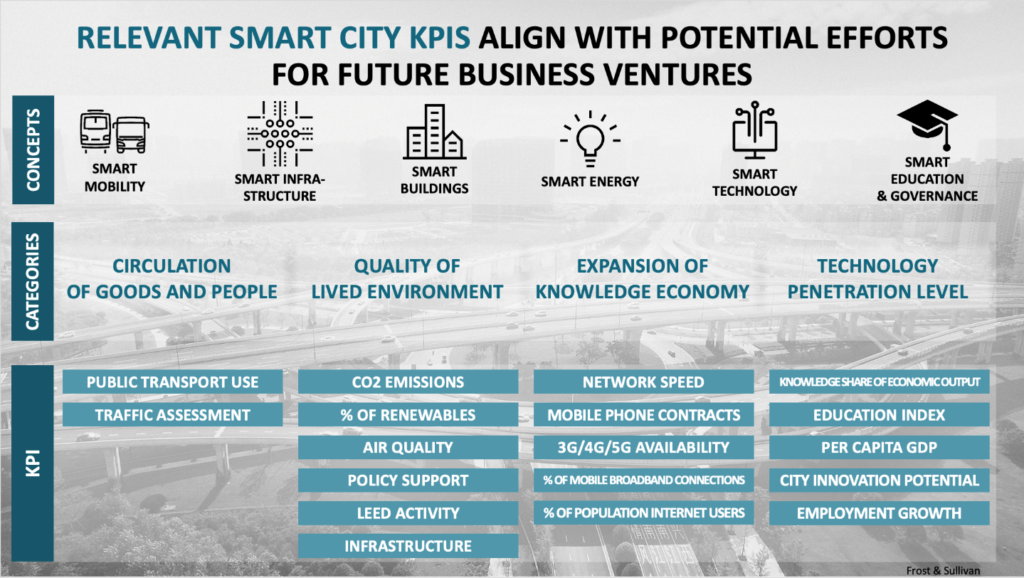
Technology readiness and market readiness are not the same thing.
A market can have excellent infrastructure but restrictive regulation. Another can have strong political support but weak economics. A third can have clear customer demand without the ecosystem required to deliver the product.
International technology expansion therefore isn’t about finding the universally “best” market.
It’s about understanding which technology, business model and ecosystem fit which market — and adapting accordingly.
the pattern
The technologies and markets have changed throughout my career, but the underlying challenge has remained remarkably consistent.
Architecture → Product → Business Model → Deployment → Scale
I tend to work at the boundaries between those stages.
That means moving between engineering and customers, software and physical systems, product requirements and economics, operating models and capital.
The common thread is turning complex technology into products, platforms and businesses that work in the real world.
That is also what draws me toward the next generation of autonomous systems, physical AI, robotics and intelligent infrastructure.
As intelligence moves deeper into the physical world, the technical breakthroughs will matter enormously.
So will everything required to turn those breakthroughs into products and businesses that can actually scale.